Lame Adventure 114: Un-astonished

This weekend I eagerly awaited Saturday when Milton and I were seeing Gatz, a more than eight-hour long marathon reading of The Great Gatsby, complete with two intermissions and a dinner break, currently playing in a sold out run at the Public Theater. I was also avidly anticipating Sunday when I tuned into the season ending finale of Mad Men.

Now that I have seen both, I am in a state of anti-climax.
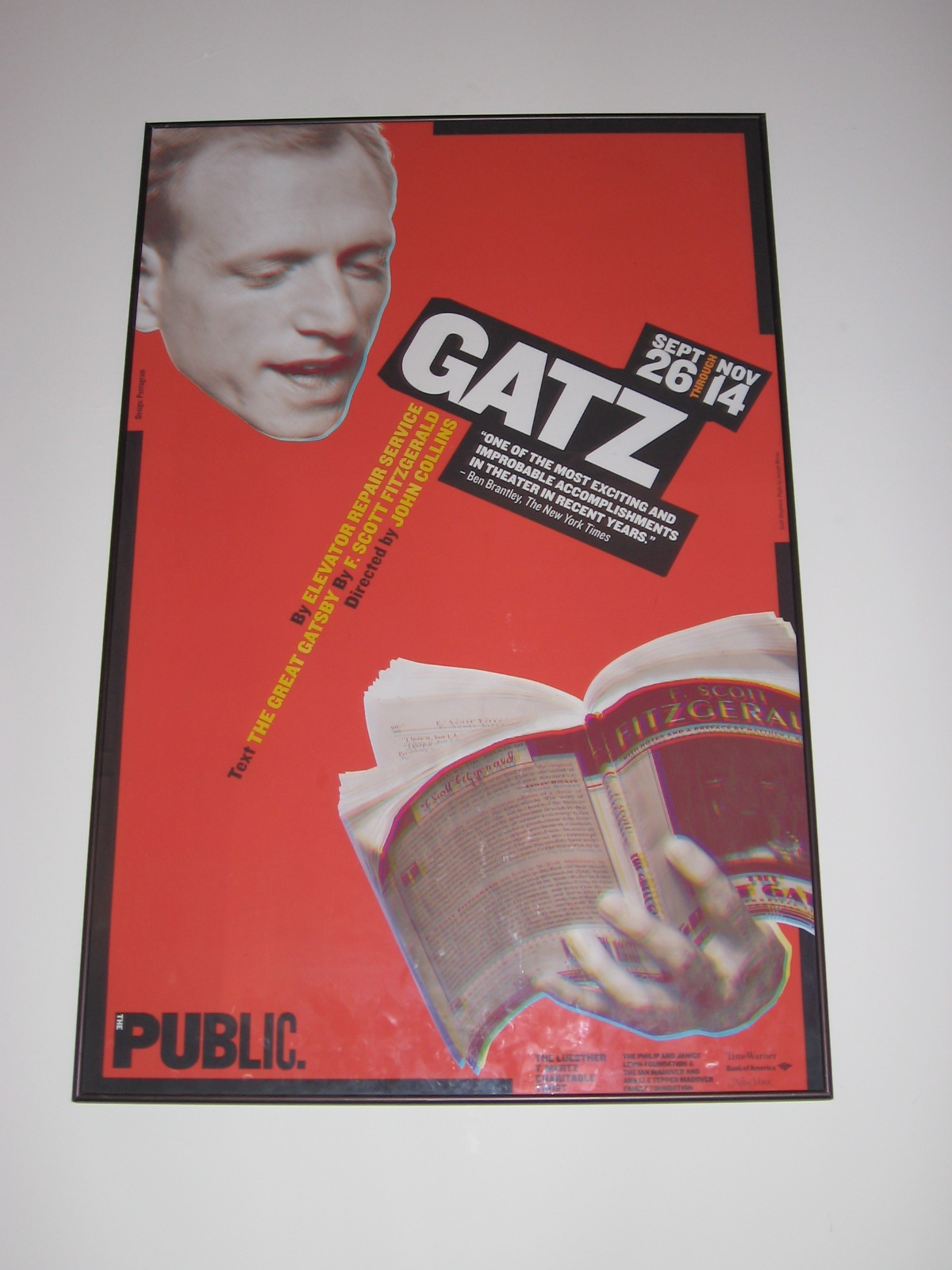
Gatz is set in a shabby office that a worker enters one morning. As he waits interminably for his ancient malfunctioning computer to boot, he opens an oversized Rolodex and out pops a weathered paperback copy of F. Scott Fitzgerald’s classic novel. The worker starts reading the book aloud, and as his colleagues and boss enter, everyone assumes a role, or various roles in Fitzgerald’s masterpiece, even though none of the actors look much like the characters Fitzgerald illustrates. The excellent reader, Scott Shepherd, becomes Nick Carraway, the book’s narrator. I agree whole-heartedly with every critic that called this premise by the theater company, Elevator Repair Service, inventive.

The New York Times chief theater critic, Ben Brantley, called Shepherd’s performance “astonishing.” Time Out New York went one step further and called the entire six-hour production “astonishing.” Astonishing to me, is entering my home and finding Barack Obama in the kitchen making me dinner, not seeing a veteran theater professional deliver a terrific performance. I expected Scott Shepherd to pull this off, and he fully met my expectations. Scott Brown of New York Magazine called Gatz a “spell-binding” six hours. Hm.

The one clear-eyed critic who nailed this production perfectly was Elizabeth Vincentelli of The New York Post:

“Still, hearing a book read aloud wears really thin. “Gatz” comes with a hip reputation — it was extended twice before opening, and has been performed around the world — but it’s as maddeningly tedious as it is brilliant. By the end, my mind was as numb as my butt.”

Furthermore, our performance seemed to have endless lampooning on stage that elicited so many peels of laughter from a novel we never considered remotely comic that Milton remarked, “This is so camp, I feel like we’re watching a marathon Carol Burnett skit.”  We found that disconcerting, and we know we’re in the minority here, but we thought it was an insult to the beauty of Fitzgerald’s prose. The guy sitting next to me was the loudest howler in the theater. I am certain that throughout the first two acts, he thought he was watching a hilarious comedy. I wanted to stick a sock down his throat.

Following the 75-minute dinner break, I briefly suffered food coma during Act 3, but Act 4, when there was little for our audience to laugh at, redeemed it for us. Afterward, Milton told me that he could not get gay male porn star, Billy Wild, off his mind. This is because Wild bears a striking resemblance to Scott Shepherd.
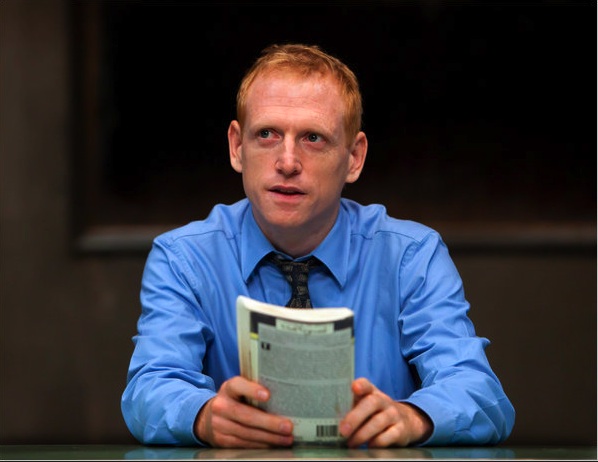
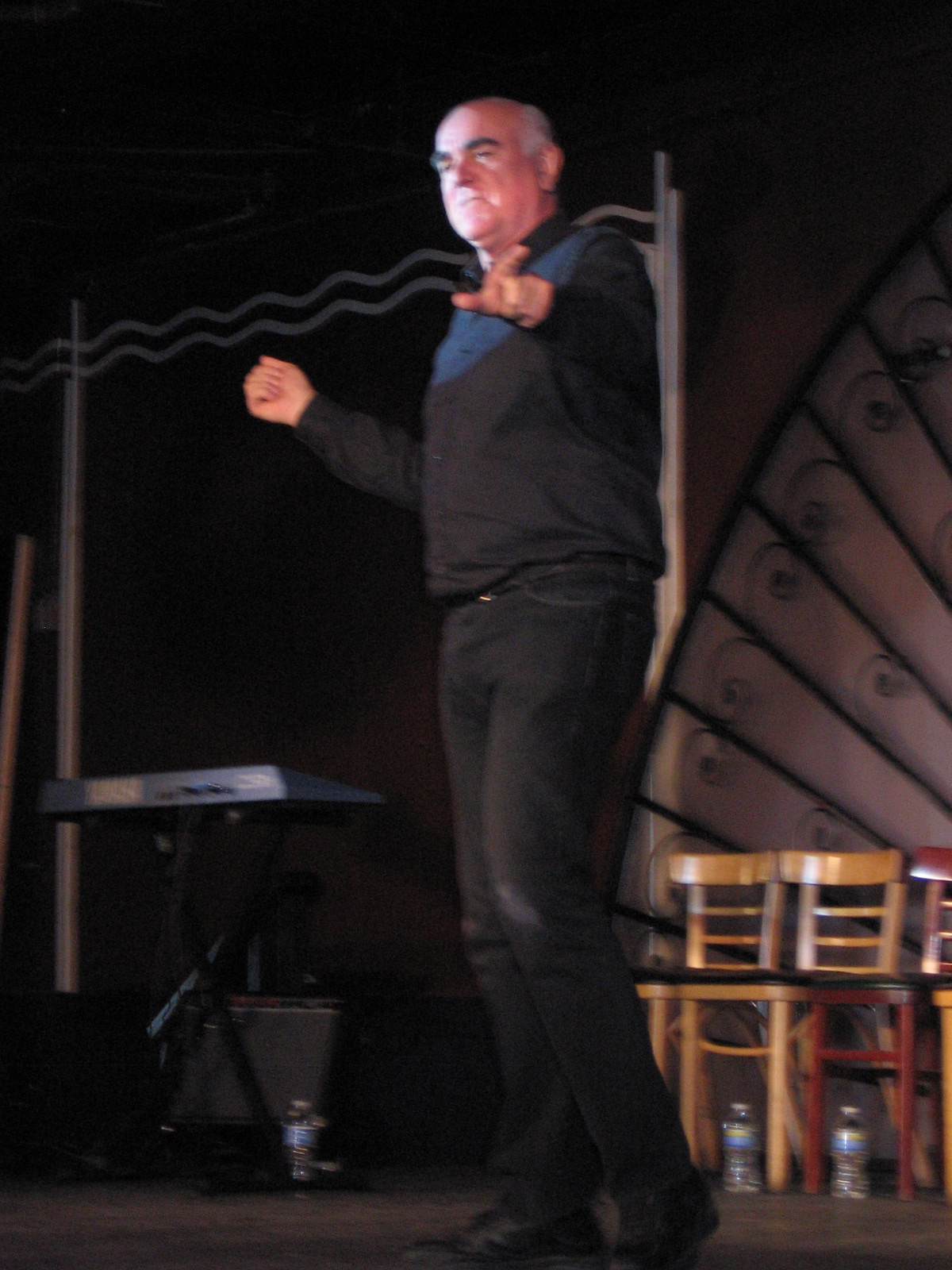
Scott Shepherd channeling Nick Carraway.
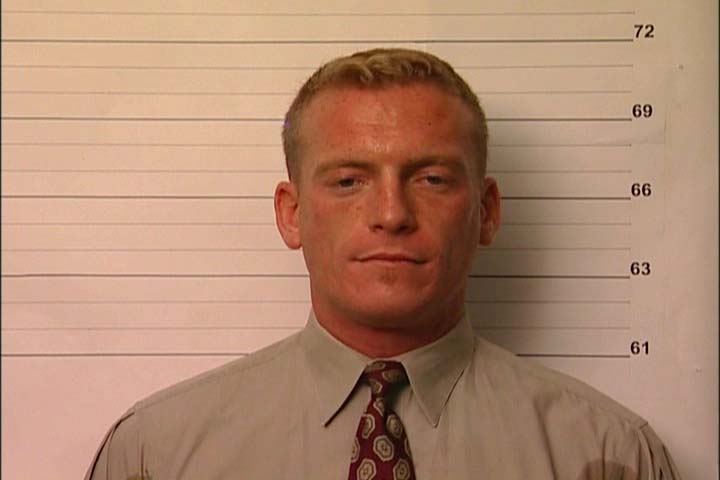
Billy Wild channeling Scott Shepherd?

As for Mad Men, featuring the somewhat Gatsby-like Dick Whitman-invented Don Draper, played brilliantly — but not astonishingly — by Jon Hamm, I will sum up the finale with a single word that could pertain to the entirety of season 4, “Douchbags.” And I mean that in a good way. Rather than join the dedicated herd compelled to deliver a blow by blow recount of every gulp of alcohol, tryst (including allusions to oral – woo hoo), chunky heave and clever bon mot, that was swallowed, spewed, and snarked this season, I will resist the urge to reveal any spoilers and simply say that it appears that no animals were abused in filming, with the possible exception of those worn as vintage furs. Mad Men remains a consistently entertaining TV show, and for anyone who has yet to follow it, it’s a very enthralling form of escapism and worthy of DVD rental. I am already looking forward to season five.

Series creator, Matthew Weiner, blows his former boss, Sopranos creator, David Chase, completely away. Week after week, every episode of Mad Men is compelling and unlike David Chase, Matt Weiner does not start sub-plots, drop them and leave the viewer hanging. Overall, Mad Men is a superior TV series, well written, well researched, well acted, even though The Sopranos was not TV, it was <cough> HBO. Provided AMC does not prematurely pull the plug on Mad Men, if Weiner is allowed to wrap this series when he’s ready to do so, I give him a big vote of confidence that the last episode of Mad Men, whenever that will be, will be a million times more satisfying than the over-hyped, ultimately flaccid and forgettable series ending finale of The Sopranos.
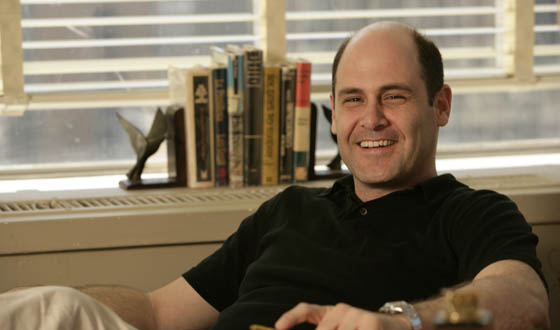
Matthew Weiner, not exactly the second coming of F. Scott Fitzgerald, but a terrific TV creator.

Meanwhile, I am also relieved that I probably have at least 39 weeks where I no longer have to feel obligated to bring my life to a screeching halt Sunday nights at 10 pm to tune into Mad Men, not that I anticipate I will accomplish anything of life-enhancing significance with that extra 39 hours. If I did, that would be astonishing.
Lame Adventure 113: The Return of the British Comedy Invasion

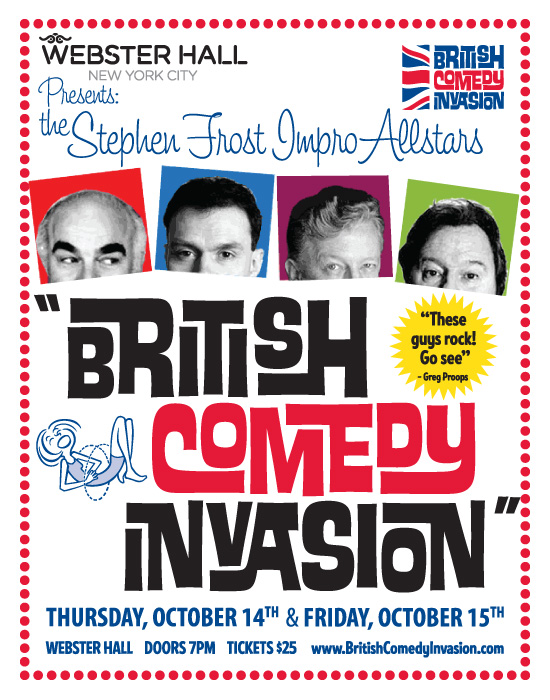
The British Comedy Invasion headed by funnyman Stephen Frost returned to the Marlin room at Webster Hall with their special brand of uproarious improv.  Bill, a tile vendor-friend from California, was visiting and wanted to get together with Milton and I after work.  Milton had already made plans, but I recalled how Zen-like Bill was during our meeting that morning when there was a thunderous crash in our showroom’s back room as the distinct smell of something burning wafted into our elegantly designed shrine to tile, bath and lighting fixtures.  While one member of our sales team checked to see what had smashed to the tune of a million dollars worth of bits, another shut a window and announced in a cheerful tone, “The burning [editorial suggestion: of Atlanta] is outside!”  The first sales associate returned with an explanation of the crash, “It was nothing.”  This made me wonder how he would have described an event like the bombing of Dresden:

Sales Associate:  Just some smoke.  It was nothing.

I suggested to Bill that we join Ling and Lowell Milton-less and see Frost, Steve Steen, Andy Smart and Richard Vranch.  Bill was intrigued.  Although we could have bought tickets on line, I thought they might be available at the door, which I don’t think they actually were.  Fortunately, a venue worker introduced me to Janet, who was working as the boys’ manager – the same role that Elaine, my UK-based friend and colleague, filled when they played Webster Hall last June.  As Janet spoke to me in her mellifluous British accent, I asked if she happened to be acquainted with Elaine.  She and Elaine are great buds, and being Elaine’s American friend guaranteed Bill and I entry to the show.  In the future, when they play Webster Hall again – and surely they must return – I urge anyone wanting to see them to purchase tickets online ahead of time.

Janet to the rescue!

The four of us settled in a banquet as we waited for the show to start.  A  Buddah-shaped woman sat next to me in what should have been Milton’s place.  Lowell asked, “Who is that?”  I explained, “She’s with us.  She’s improvising being our friend.”

Stephen Frost giving us the index finger.

The boys delivered their usual brand of spontaneous mayhem and lightening fast wit but this time they even seemed a little more physical than last, with Frost sucker slapping Smart not once, but twice, and Steen, improvising a circus elephant’s trunk by waving his arm, and then dousing Frost in the face with projectile water shot out of his mouth.  This brought the house down, as dripping Frost announced to no avail, “That’s not funny!”  Vranch provided improvised musical accompaniment that was a joke in itself when he played a completely unfamiliar tune in a skit about the Beatles.  Smart bellowed, “What Beatles song is that?”  Vranch defended his performance and said it was an improvised Beatles tune.

Their repertoire is jam-packed with numerous funny bits inspired by audience shout-outs that these comedy veterans twist into contorted stories such as one about Queen Elizabeth’s ill-fitting thong with the Windsor crest on the label that somehow ends up inside out, and possibly on Prince Philip, or maybe it did not go quite that far, or it went even farther.  This quartet is equal to musicians entering a zone that begin to riff and every note of what you hear sounds great as you’re listening but when you leave, you know you’ll never be able to hum what you just heard.

Bill was particularly impressed with Vranch telling a story about cooking and wooden underwear (intimate apparel was on the audience’s mind Friday night) in fluent gibberish accompanied with flamboyant gestures, which Smart hilariously translated as, “I am not a well man.”  How one could speak nonsense in what sounded like an actual accent from some remote country, while the other spontaneously tells the story in English is brilliant to witness.

Steve Steen’s specialty is the dirty joke, and he seemed to thrive in a skit with Frost where they played surgeons in an operating theater removing a patient’s testicle, but somehow by the skit’s end Frost had sewn Steen’s shoulder to the unseen patient’s half-hollow nut sack.

As usual, the foursome wrapped the evening’s entertainment with a routine that grows in hilarity as it completely implodes.  This is where they tell a story, but each guy voices another guy’s character.  Therefore, they have no clue what anyone is going to say.  This routine should come with a warning: if on medication do not attempt doing this at home, but if you do, this might be a fine time to operate machinery if your goal is to drive yourself off a cliff.

The skit was something about a John Wayne-type father disapproving his daughter’s marriage to a weasel as the vicar prepared to conduct the service.  As this skit descended into complete chaos, Frost, who was mouthing the father spoken by Smart as Smart stood across from him mouthing the daughter voiced possibly by Frost  … I think, or possibly it was the other way around since this zany routine is almost as hard to follow as it is to perform.  Frost, his head about to explode, announced, “I don’t remember my character!”  Neither did we, but it sure was funny.  I think he may have then sucker slapped Smart again, or maybe that second slap happened earlier.  I do know that however that skit ended, all was right in the world of British Comedy Improvisation once more.

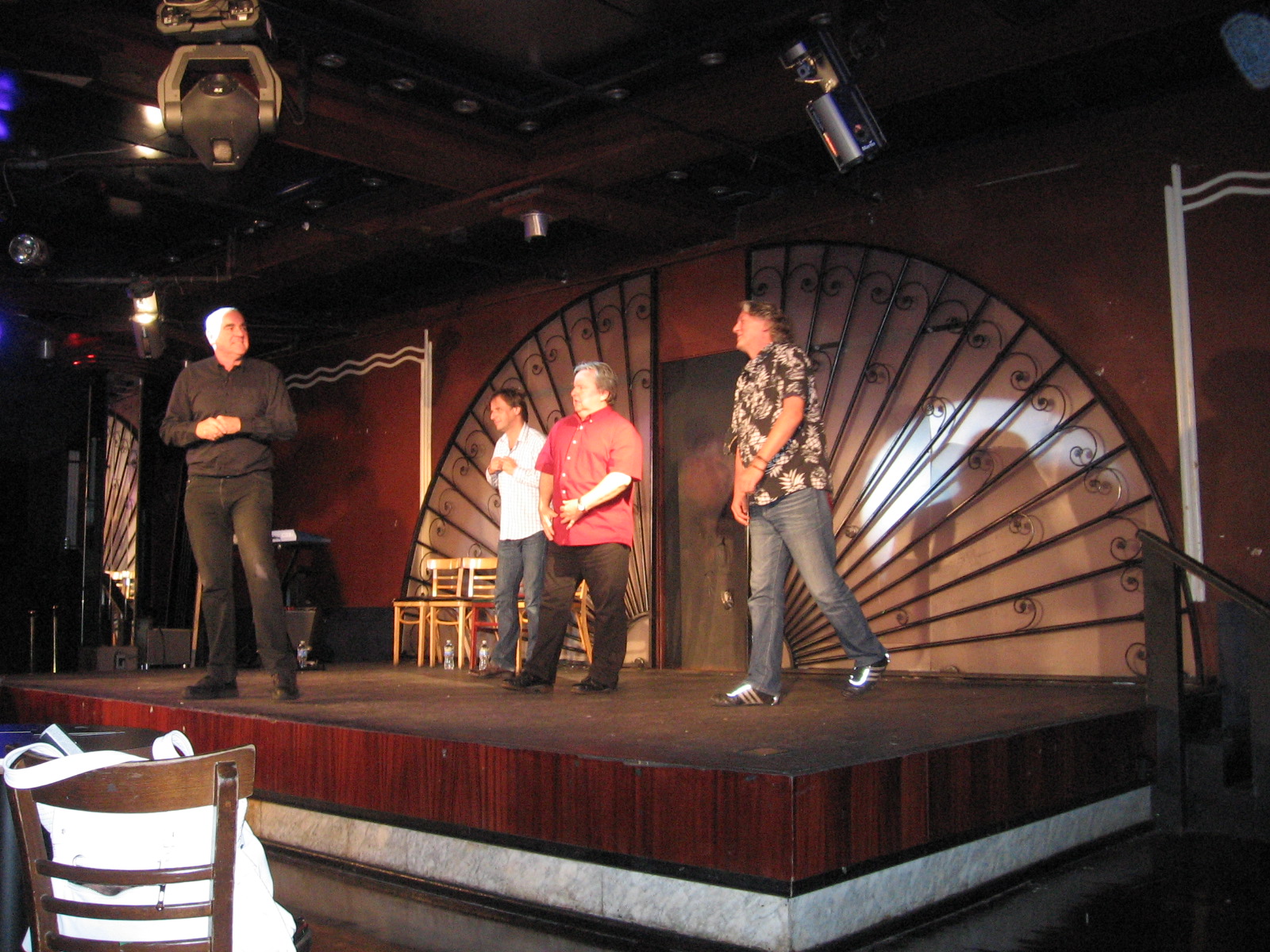
Expert funnymen from across the pond (left to right) Frost, Vranch, Steen and Smart

Lame Adventure 112: Orlando the Ultimate She-Man

Thursday night after work, Milton and I met at the Classic Stage Company, an off-Broadway theater to see Sarah Ruhl’s adaptation of the Virginia Woolf novel, Orlando.  In my confused youth, the second I whiffed that Woolf had written a gender bending time-traveling semi-biographical story about and for Vita Sackville-West, a woman she had an affair with in the 1920s, fireworks exploded in my head.  My friends were drooling over David Cassidy, Bobby Sherman, and Donny Osmond, a trinity of bland teen idols I found about as exciting as a TV test pattern.  What excited me was getting my sweaty little mitts on that book about a nobleman who transforms into a noblewoman.  The premise blew my adolescent mind.  Orlando was my first exposure to Woolf.  Since I was barely 13, I found the story completely bewildering.  Yet, I managed to read it in its entirety even though it essentially entered one eyeball and exited the other.

Early edition of the novel.

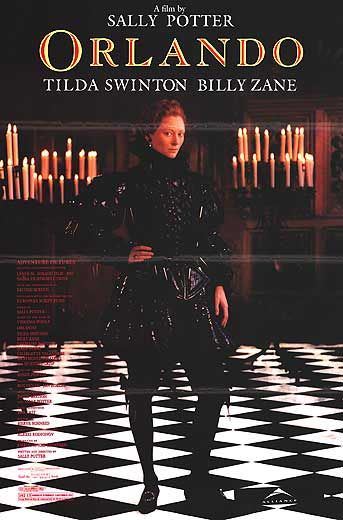
Years later, in 1992, filmmaker Sally Potter directed an accessible film version of Orlando featuring Tilda Swinton in the title role, and Quentin Crisp as Queen Elizabeth I.  Billy Zane played Orlando’s male love interest; this was when he had long flowing tresses and looked dashing.  Nearly twenty years later, what I most recall from the film was after Orlando changes genders from male to female, she looks straight at the camera and matter-of-factly states, “Same person, no difference at all.  Just a different sex.”  I loved that moment and have been a Tilda Swinton fan ever since.

Movie poster.

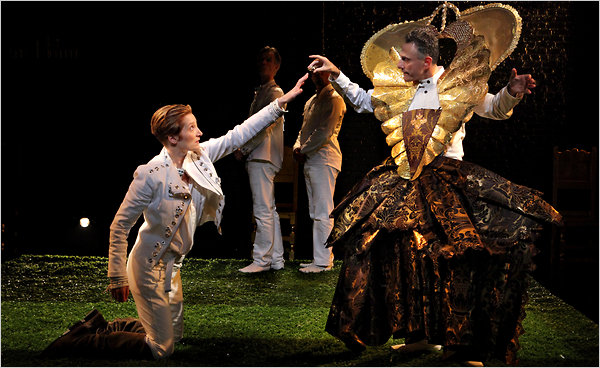
Sarah Ruhl’s spirited theatrical adaptation makes me want to give reading the novel another try, but more likely, Milton will rent the DVD of the film on Netflix and he’ll let me borrow it.  The play is packed with droll wit.  Director Rebecca Taichman has overseen a very inventive production.  Even though the set, designed by Allen Moyer, is minimalist with a giant mirror suspended over a large swatch of fake grass filling the stage, this use of artifice perfectly personifies nature as a shimmery sheet symbolizes snow and ice.  Another element that contributes to this production’s depth is Annie-B Parson’s flowing choreography.  The entire ensemble cast deserves a loud shout out.  Their energy is vital in bringing this story to vivid life.  Francesca Faridany is wonderful as ageless Orlando, in any gender.  At one point, she exited the stage to sit on the theater’s steps where she continued to interact with her fellow cast members from afar.

She sat next to me.

I thought, “This is surreal. Orlando is sitting next to me.”  My next thought was, “I so hope I don’t sneeze or cough right now.”  For once my body functions did not betray me.

David Greenspan, a man of many vocal inflections, is hilarious as Queen Elizabeth I and a cloying duchess who later returns as an equally cloying duke.  Tom Nelis is spot on as both a multiple hankie dropping jilted girlfriend and Marmaduke Bonthrop Shelmerdine, the man Orlando marries, as well as numerous other characters.  He can also belt out a song in grand opera style.  Howard Overshawn in one moment embodies a maidservant who vows to never remove her wedding ring and just as easily segues into the solicitous captain of a ship.  Fluid gender bending is everywhere in this play, with the sole exception of lovely Annika Boras’s Sasha, the ethereal ice skating Russian princess that breaks Orlando’s heart in his male youth.

Girls playing boys and boys playing queens.

At the play’s close, Orlando exuberantly declares, “I’m beginning to understand now!”

As does the audience.

Then, the actors took their bows to rapturous applause.  Once the cast left the stage, the audience made a stampede for the exit with such aggression, a guy who could have been the body double for Sasquatch stepped on my candy bar, giving me the impression that he and almost everyone else in the room had been trapped in a deep hole in Chile for 69 days, as opposed to two hours in Virginia Woolf’s Wonderland courtesy of Sarah Ruhl.

Closing Sunday October 17th.

Lame Adventure 111: Gay Christmas Preparation Time

Gertrude Stein’s most famous quote is a sentence she wrote in 1913 for a poem she penned called Sacred Emily. Stein wrote, “Rose is a rose is a rose is a rose.”  This quote is often interpreted to mean that things are what they are.  Had Stein written, “A Tazmanian Devil is a Tazmanian Devil is a Tazmanian Devil is a Tazmanian Devil,” instead, it is likely that this observation might have shot straight out the window and into oncoming traffic rather than standing the test of time for nearly a century.

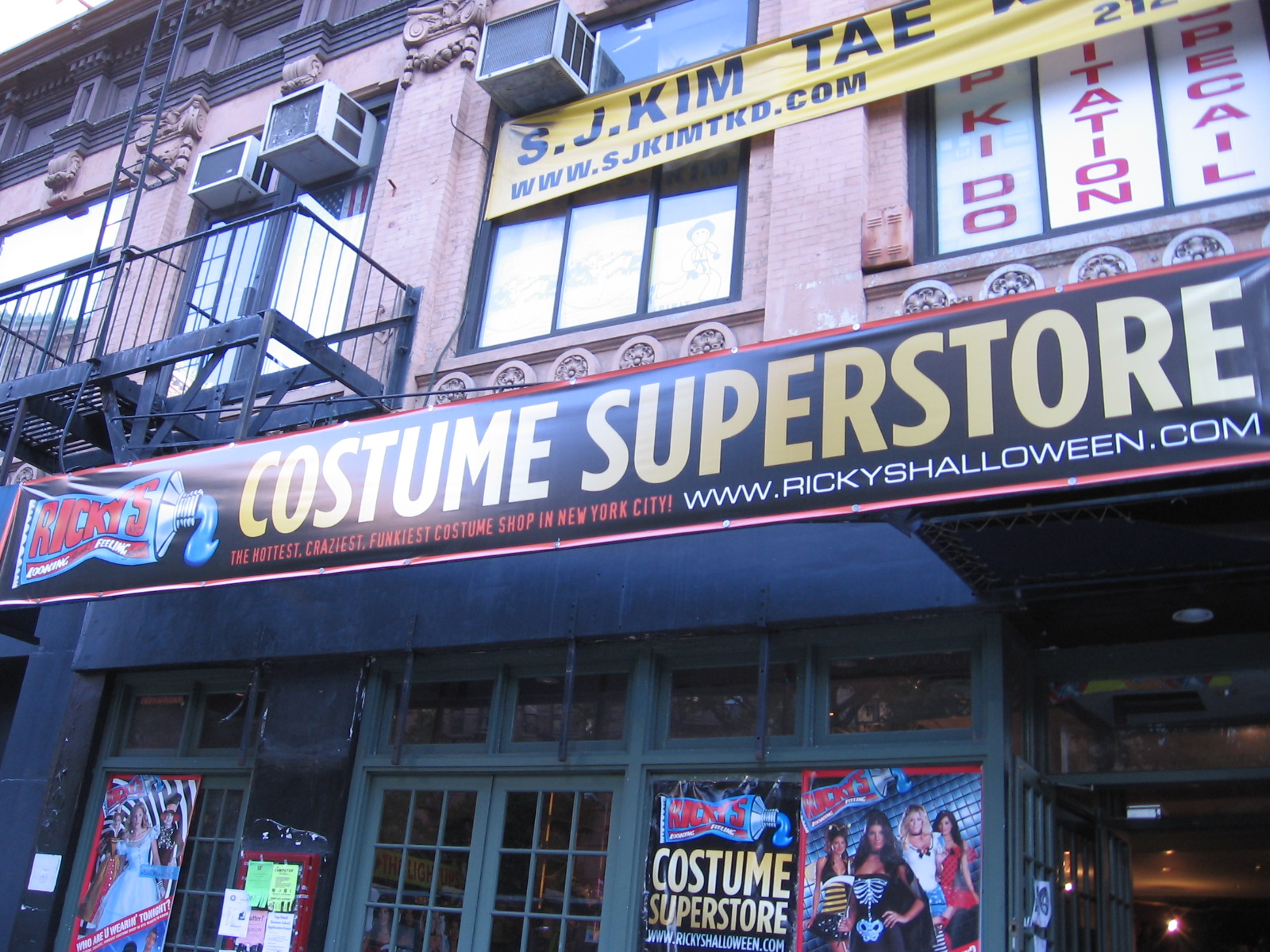
Recently, I was walking up Broadway where I spotted Mike, dressed for work outside a Rickey’s Halloween pop-up store in a man-sized costume that brought to mind a six tall hound, located between West 77th and West 78th Streets.  If I were inclined to get a Halloween costume, Rickey’s would be my go-to source.  When I do shop there it is for unusual items, such as the cat-butt magnets that scored a big hit with my former sidekick, Jewel, on her birthday.

Formerly a Ruby Foo's restaurant; now Halloween costume shop central.

Bracing myself for Mike’s response I revealed the infinity of my ignorance and asked, “Who are you supposed to be?”  Barely able to hide his contempt for such an imbecilic question, he muttered in an annoyed tone, “Taz.”

Easily recognizable Taz.

In fairness to Mike, many decades ago when I went trick or treating, dressed as Fred Flintstone, nothing annoyed me more than some old-timer asking me, “And who are you supposed to be?”  I wanted to say, “Fred Fuckin’ Flintstone, you moron!”

My protective father hovered behind me like my very own personal Tazmanian Devil.  No sooner would the candy-giver close their door than my dad would channel his inner Ethel Merman/Mama Rose; a Rose Ms. Stein would surely see as unlike any other Rose had she the chance to catch the musical Gypsy.  My dad would be coaching me on how to announce, “Trick or treat!”  The more he urged me to “shout out” the quieter I’d get, to the point where I’d stand mute, and just tap an anemic knock on a door.  This drove my Type A personality father so crazy, he took it upon himself to stand behind me and voluminously bellow, “Trick or treat!”   A deep male voice emanating from a pint-sized girl – dressed as Fred Flintstone — thoroughly confused the candy givers, but somehow he and I got through Halloween together that year.  After we returned home I was popping the Milk Duds, and he, the Anacin.

I asked Mike if he had a choice of costumes.  He mentioned Super Mario and a character I had never heard of called Yoshi.   To camouflage my blank expression to the latter half of his response, I rubbed my chin, puffed my Sherlock Holmes pipe thoughtfully, and said, “Interesting.”  When I returned home, I immediately did a Google search on Yoshi who happens to be the dinosaur in Super Mario Brothers video games.  Small world.

Yoshi

What I remember most about my childhood Fred Flintstone costume was nearly asphyxiating behind the plastic mask that fit over my face with a string of elastic wrapped around my head.  Already, by the tender age of six, my nose was B cup bordering on C cup.  The pinpoint-size air holes just didn’t cut it with my industrial strength ventilation system.  I could not have been sweating harder than if I had been hiking the Sahara at noon as opposed to walking a few evening neighborhood blocks in chilly San Francisco with my dad.

It might seem perverse that my mother chose to dress her whippet-thin daughter as Fred Flintstone for Halloween.  Yet, she instinctively knew I would sooner throw myself in front of a moving bus than be seen in a tutu or some princess getup.  Therefore dressing me up as anorexic Fred was the perfect solution.

A real Taz Devil. "Dad, can we keep him for a pet? Can we, can we, can we? I want to call him Marvin!"

Lame Adventure 110: New York Film Festival – Joe Dante’s The Hole

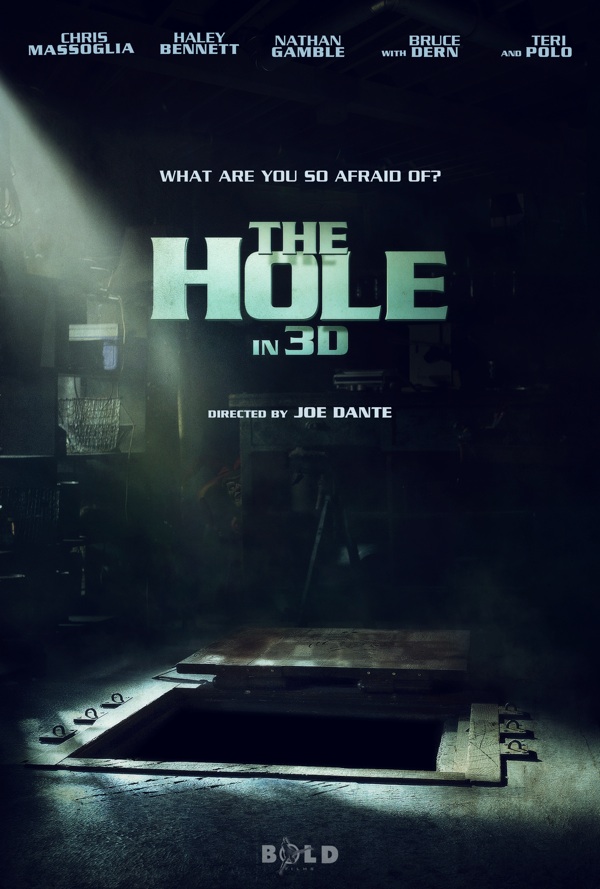
Since Milton’s nasty cold has escalated to the point where he’s now phlegm on feet, a site that does not mesh well with sequins and glitter, he gave our mutual friend and horror film buff, Ulla, his ticket to Joe Dante’s The Hole, our last New York Film Festival screening.  She was thrilled with the idea of having the crap scared out of her since this film was shot in 3D.  She said, “I’m coming prepared.  I’m wearing a diaper.”

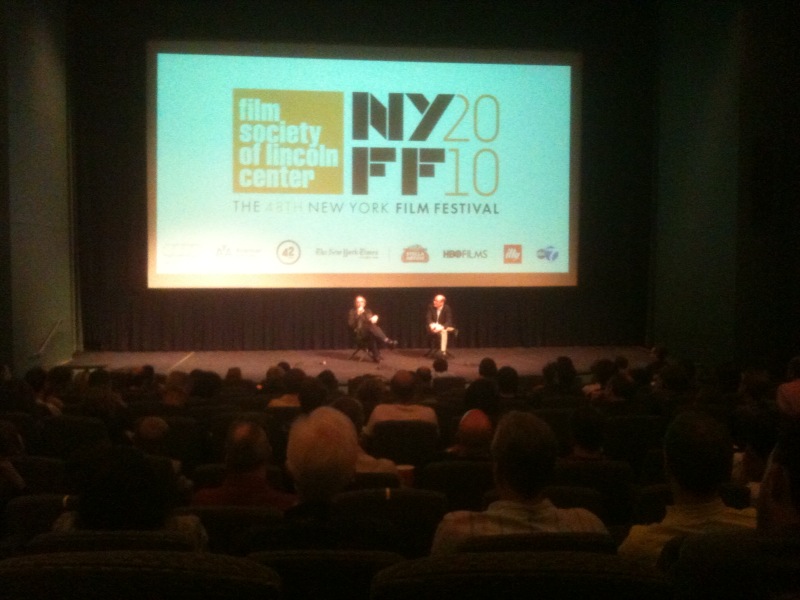
The Hole, was attended by a very excited crowd that included director Dante’s collaborator, John Sayles, who wrote the screenplays for Dante directed comedy horror classics, Piranha (the original 1978 version), and The Howling, released in 1981.  Dante joined the moderator, Film Comment editor, Gavin Smith, in introducing the film.  To further psyche the eager audience, he walked onto the stage wearing his Dolby 3D glasses.  Smith followed Dante’s lead and donned his.

During his introductory remarks, Dante, who was born in Morristown, New Jersey in 1946 and grew up in Parsippany, mentioned that he first attended the New York Film Festival in 1965.  He did not say what he saw, but he implied that he never imagined that this elitist institution would ever screen one of his films.  Ironically, The Hole, was one of the few screenings that sold out well in advance this year illustrating that today’s audience, even in a city as sophisticated as New York, has a much greater appetite for mainstream as opposed to the more marginal-stream fare that the NYFF usually screens.  Also, the ticket price for The Hole was a bargain — $12 rather than $20 for most of the other screenings.

The Hole, full of wit and intrigue, is a taut and fun slice of horror-lite.  It is not packed with gore nor are buckets of blood spilled, but it has some nice, creepy moments.  The tale is about a pair of bored bickering brothers, who have just relocated with their single clueless mother, Susan (Meet the Fockers Teri Polo), from their beloved Brooklyn to a rental home in the town of Bensenville.

The older brother, Dane, is a sullen teenager played by heart-throbby-type Chris Massoglia.  He looks a bit like Justin Bieber, if Justin Bieber looked more like a masculine 16-year-old boy than a surfer dude-ette 35-year-old lesbian.  The younger brother, Lucas, is a sweet grade schooler, played by scene stealer Nathan Gamble, who delivers some of the film’s best lines.  During a moment of  rough housing, the boys discover a heavily padlocked door in the floor of the basement that, of course, they must open, or else there would be no film.

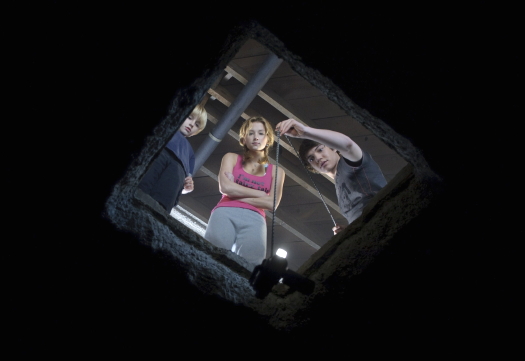
Only the insane or curious kids send a video camera down there.

Their new friend, Julie, the yappy Pekinese owning neighbor-girl (the competent Haley Bennett), refers to the boys’ hole as “the passageway to hell,”  and she enthusiastically adds that it is “so cool.”  This is before she realizes that the hole is full of haunting surprises that will include her.

Screenwriter Mark L. Smith has hit on an intriguing premise, a hole that recognizes the worst fears of anyone that looks into it.  Even if Dante does not hammer his audience with gross out clichés, composer Javier Navarette’s eerie music score provides chills and more than a few goose bumps.  Bruce Dern, an actor with a reputation for playing memorable whackos, makes a delightful cameo as Crazy Carl, the previous tenant of the boys’ house who is now the resident loon in an abandoned glove factory.

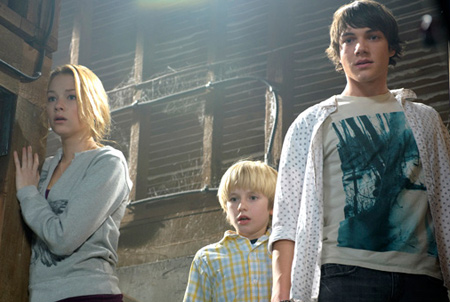
The Hole kids after glimpsing some crazy shit.

A bit of trivia about the climactic scene at the end – if something about it looks familiar, Dante, who shot the film in Vancouver, BC, recycled the set from James Cameron’s TV series, Dark Angel, which ran from 2000-2002.

Overall, The Hole is a family-friendly production and would be a very good “starter” horror film for children under ten.  Older kids will probably be intrigued by the hole itself.  As a certified case of arrested development, I certainly was.

Afterward, Dante, gave very generous Q&A, reflecting how horror, which was always considered grade B cinema in his youth, remains one of the most popular and successful genres today.  He said his influences for this film were Alfred Hitchcock’s Dial M for Murder and Italian filmmaker and fright master, Mario Bava.

Joe Dante, seated left, during Q&A with Gavin Smith.

Even though The Hole won the inaugural 3D Persol award at the Venice Film Festival in 2009, Dante claimed that he would have preferred if it had been shot with RealD 3D technology, but due to budgetary constraints, he was forced to settle for Dolby 3D.  His likely third choice was probably No 3D.  His issue with Dolby 3D is that he thinks it looks darker, but to our untrained film going eyes we thought it looked fine.  He said he made it for around twelve million dollars, a pittance when one considers what Hollywood produced 3D films cost.  The Hole has yet to find US distribution, but it has opened in Europe.

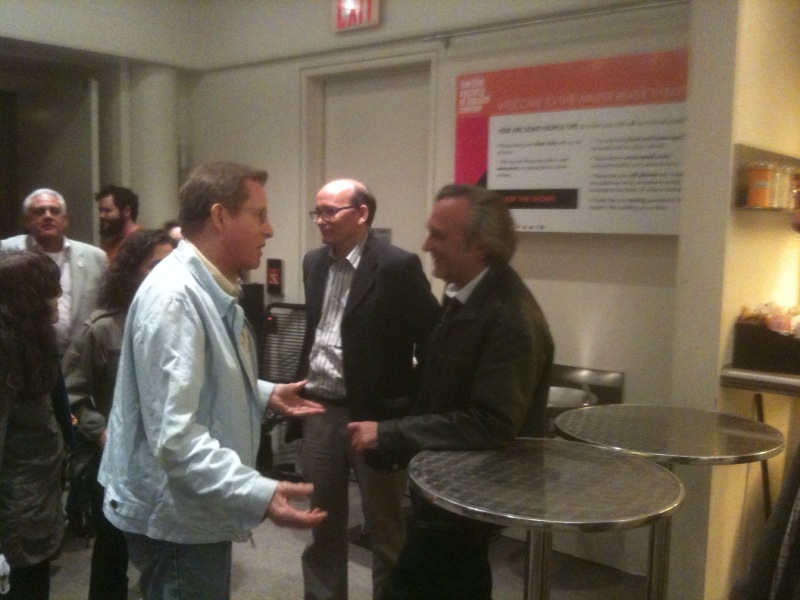
After screening, Joe Dante, chewing the fat in the theater lobby with a fan.

While I was writing this post, Milton called to say that he felt so ill on Saturday and was coughing so violently, he was wondering if he had tuberculosis.  He slept heavily through Sunday, when he woke feeling both considerably better and ravenous.  Therefore, he ate an entire pie – the new cure for the common cold.

Lame Adventure 109: New York Film Festival – Black Venus

By the time this post is published, Milton should have a full-blown monster cold.  It does not help his condition that we have been attending New York Film Festival screenings almost every night of the week, but there was no way he was going to miss Black Venus, a film from France directed by Abdellatif Kechiche.  Albee and I had seen Kechiche’s last film, The Secret of the Grain, which was lengthy, frustrating, depressing and since the grain in the title was cous cous, which always looked delectable, we left the theater ravenous.  Someone could have salted our armrests and we would have devoured those.  Instead, we settled for burgers.

Black Venus, a historic drama based on Saartjie Baartman, a woman who lived in the early 19th century, has a 159-minute runtime.  When Village Voice film critic and member of the NYFF selection committee, Melissa Anderson, introduced it, she referred to the performance by Yahima Torres as “astonishing.”  I groaned in Milton’s one unclogged ear, “Hyperbole.”  Milton, clutching two fistfuls of tissues, and possibly a roll of toilet paper he absconded from the men’s room, muttered, “This better be good or I’ll be snoring fast.”

As with The Secret of the Grain, Black Venus is also lengthy, frustrating and depressing, but where it differs from Kechiche’s earlier film is that it’s excellent. Not only was it excellent, “Mortimer Snerd” (Milton’s name for Melissa Anderson) knew what she was talking about in her introduction.   She earned our respect.  Yahima Torres was brilliant.  Torres can convey more while silently smoking a cigarette than Hillary Swank babbling eight pages of dialogue.

Living a life void of mirth.

Saartjie Baartman was a tragically exploited slave from Cape Town, South Africa who traveled to Europe in 1810 with her owner where she became infamously known as the “Hottentot Venus.” This was due to her enlarged buttocks and elongated labia.  Her unusual anatomy fascinated white people.  Saartjie’s owner forced her to perform in freak shows in London and later, Paris.  In their act, she is shackled and introduced huddled inside a cage.  He constantly cracks a whip and orders her to perform a salacious dance, and it gets worse …  The on-screen voyeurs watch in sheer delight, while the off-screen viewer cringes in horror.  The film relentlessly pummels the viewer with this woman’s degradation.

She’s lonely and miserable, with no friends or family and trapped in a country where she cannot speak much English or French.   As she struggles to maintain her dignity, she tries to drown her pain with alcohol.  In a deeply moving scene where a French journalist interviews her in a carriage, she recalls the life she had before coming to Europe.  Emotionally, Black Venus is a devastating portrait of racism, sexism, and abuse, but there’s a “happy” coda at the end.  Oddly, it almost brought me to tears.

During the Q&A with Torres and Anderson, a young African American woman detonated.  She ached to give director Kechiche, who was not in attendance, a piece of her mind about how much this film offended her.  She took her anger out on Torres, but before Torres could respond, a middle aged African American woman sitting behind us, shot out of her seat and begged Anderson to let her have a say.  Anderson ordered both audience members to pipe down. Torres delivered her defense of both her character and the film which did not satisfy her detractor in the least.  She wanted a fight, and spoke over Torres.  Anderson, to her credit, lashed out at the detractor, “You’re being rude!  Let her finish speaking!”   When Torres finished, the detractor was eager to regain the floor, but Anderson gave the go ahead to the woman behind us to have her say.  She articulately defended the film, explained why it so resonated with her, and praised Torres’s performance.

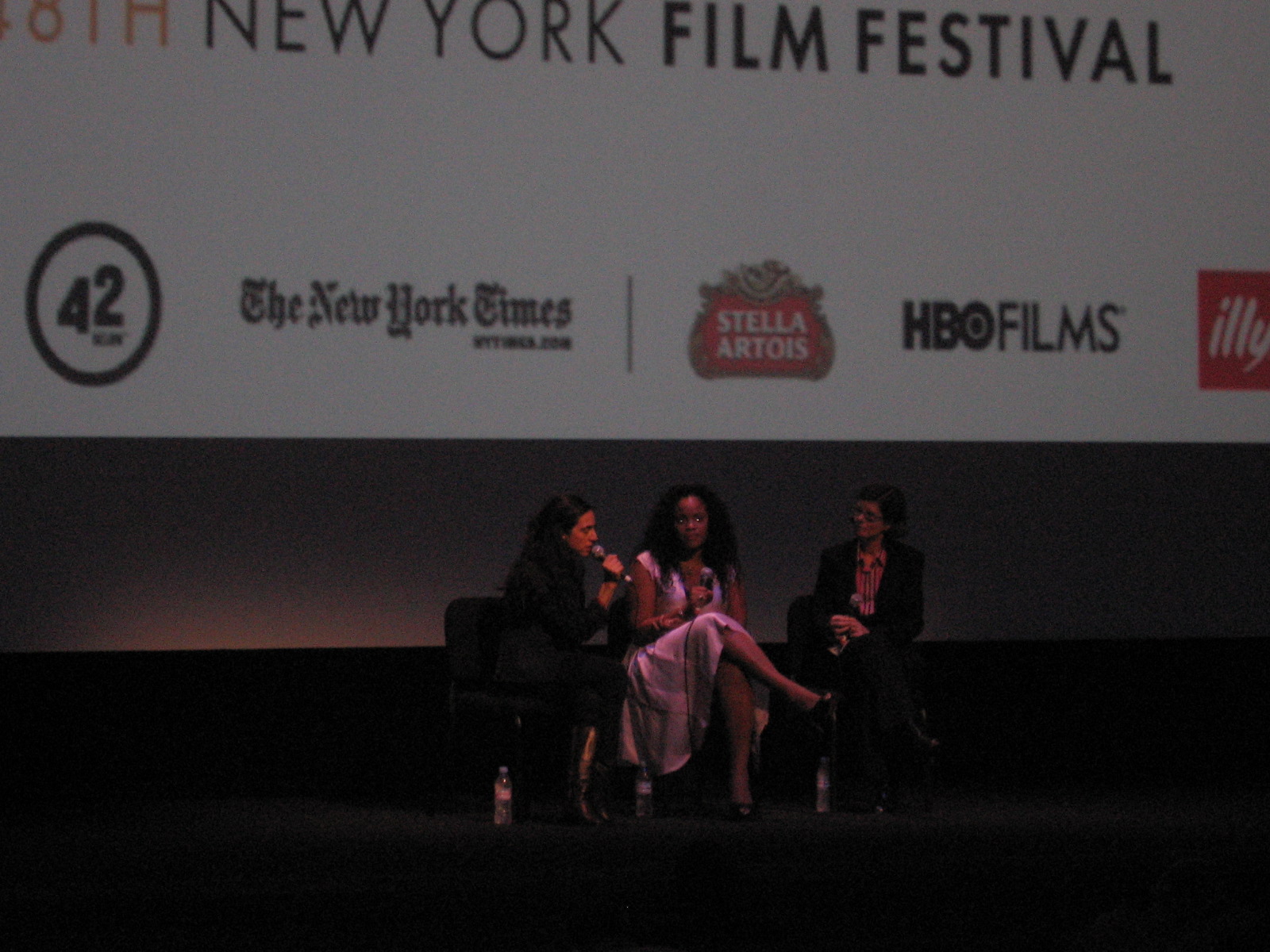
Yahima Torres's interpreter, Yahima Torres and Melissa Anderson.

The audience enthusiastically applauded her remarks.

Anderson decided to close the Q&A there; so I did not get to ask my two-part question, does it have a distributor yet and when will it be released over here? I hope soon, but it is very controversial.  As Milton pointed out, “People are going to bring a lot of their own baggage to this one.”  As we left, he added, “That was so good, I forgot I have a cold.”  He continued, “I feel like we just saw the black version of Breaking the Waves.”

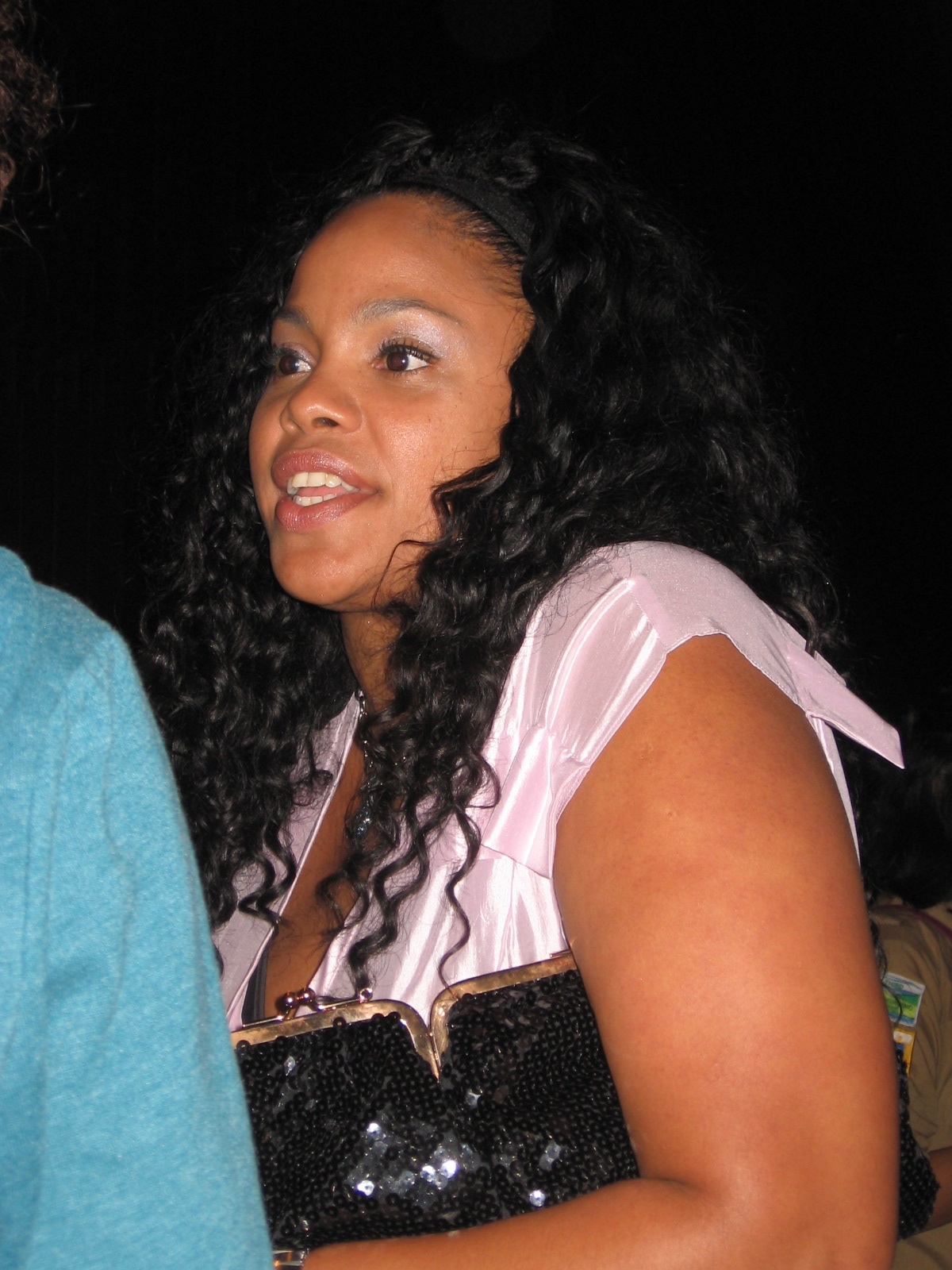
Yahima Torres feeling love from viewers that were impressed with both her performance and the film.

Yahima Torres' shoes. Milton also loved her fancy footwear.

Lame Adventure 108: An Invitation from Suzan-Lori Parks to Milton and Me!

Recently, The Public Theater, where Milton and I share a membership, sent us an email that said the following about a playwright we both admire:

Suzan-Lori Parks Invites You to Watch Her Work

This performance piece, a meditation on the artistic process and an actual work session, features Pulitzer Prize winning playwright Suzan-Lori Parks working on her newest writing project in the main lobby of The Public Theater. The audience is invited to come and watch her work and/or to share the space and get some of their own writing work done. During the last fifteen minutes of the performance Parks will answer any questions the audience might have regarding their own work and their creative process.

The problem is that S-LP is doing this during the workday proper and my boss Elsbeth’s calendar is already packed with notes about my comings and goings related to all the New York Film Festival screenings I have been attending.  I ponder how she might digest a request from me to cut out for a seventy-five minute adventure, excluding travel time, to watch a writer write in a lobby packed with students, retirees, and people that called in phony-sick from work.

As much as I would like to employ the “something came up” tactic, I fear that this could backfire badly:

Me:  Elsbeth, something came up. I have an opportunity to network* with a brilliant playwright.

Elsbeth:  That’s great.  Who?

Me:  Suzan-Lori Parks.

Elsbeth:  Who?

Me:  She won the Pulitzer for Topdog/Underdog.

Elsbeth:  Should I know about this?

Me:  You do now Boss!

Elsbeth:  When are you going to meet with her?

Me:  That’s the thing.  I have choices.  Today, at noon, tomorrow at three, or Friday morning at eleven.

Elsbeth:  I have a better idea.  How about you stay chained to your desk, get some work done since I’m paying you, and you don’t go at all?

That’s the type of suggestion I would make to my sidekick, Greg, if he tried to pull this on me, after I had granted him three days worth of favors in the same week, and I also had an eyelash stabbing me in the iris.  Greg is straightforward with me when he needs a favor.  I could try the straightforward approach with Elsbeth.

Me:  Get a load of this, I’ve got an invitation from The Public Theater to watch resident playwright Suzan-Lori Parks write.

Elsbeth:  You’re going to watch someone write now?

I instinctively know from that imaginary reaction the conversation will crash land.

Milton is not inclined to barter with his superiors to attend S-LP’s writing session.  He even purposely resisted the opportunity to attend a book signing with one of his favorite authors, Michael Cunningham.  Milton’s purpose was to stay home and write, although we did spend forty-five minutes on the phone discussing his act of extreme self-sacrifice.

Milton:  I really wanted to see him, but we’ve been going out so much lately, I’m not getting any writing done.  At this rate, I won’t have anything finished until next year.

Me:  I’m torn over missing S-LP.  I just think if I laid this on Elsbeth right now, I’ll cross the line with her and she’ll finally detonate.

Milton:  I don’t think missing seeing her write is missing much.  No one would want to see me write.  That’s for sure.

Me:  You think?  First you open a bottle of wine, pour yourself a glass, and check your e-mail.  Then, you open Word.  You top off your glass of wine and play Bettye LaVette on your iPod.  You decide to change the font from Arial to Times New Roman, and write a sentence.  You hate the sentence, and then decide what you really hate is writing in Times New Roman.  Instead of changing the font back to Arial first, you delete the sentence, save your changes, but then you cannot recall what the sentence was.  Frustrated, you pour yourself a third glass of wine and watch a DVD.

Milton:  Have you been watching me write?

*This is no more of a networking-type event than I could claim I once had a conversation with baseball hall of fame catcher Gary Carter.  Years ago, when I was working as a production assistant on a Pringle’s potato chip commercial featuring then New York Mets catcher, Carter, I was told to fetch a can of Coke for him.  I did.  When I entered his dressing room and handed it to him, devout Christian Carter said, “God bless you.”  Dedicated atheist me asked, “Who sneezed?”  Fortunately he laughed at my snark, and I was not fired on the spot.

Lame Adventure 107: Happy Birthday John Lennon

I admit that the title of this post is premature.  Next Saturday, October 9th, would have been John Lennon’s seventieth birthday.  I find this incredible, but when I consider how much middle age female Viagra (Aleve) I pop, it does make sense that half the members of the Beatles are now septuagenarian – a word I can spell, but cannot pronounce.

When Ringo Starr turned seventy last July 7th, his milestone rated morning talk show and evening news mention.  He wanted his fans to say, “Peace and Love,” at noon as a birthday gift, as if uttering that trite utopian phrase would have an iota of impact on relations between the US and Iran.  During Ringo’s magical moment, I was in the process of disemboweling the office copier and predominantly thinking, “War and Hate.”

John Lennon’s milestone touches me far more.  I loved John Lennon.  I do feel genuine affection for the other three Beatles, and I felt sad when George Harrison died, but John is by far my all-time favorite Beatle.

John Lennon - a Beatle apart.

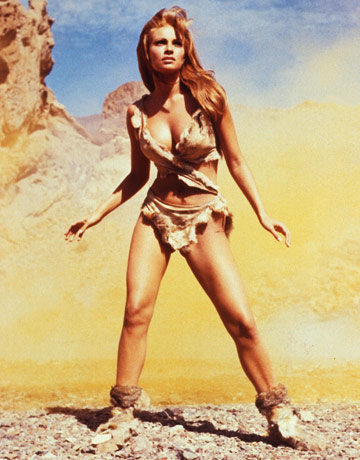
My sister, Dovima, was a Paul McCartney fan.  She wished that he was our brother, something that never made an iota of sense to me.  If Axel, our actual brother, wished that one of his sisters were Raquel Welch, he kept it to himself.

Axel's silent prayer, "Please God, please! Make her my third cousin twice removed!"

I had no desire for John to be my brother.  Although my attraction to him was not sexual, I was drawn to his music, wit, charm, and especially, his irreverence.  In 1966, when he made the faux pas of declaring that the Beatles were bigger than Jesus Christ, that rang true to this Catholic schoolgirl and atheist-in-the-making.  I was a hardcore Beatle believer, but religion thoroughly bored me.  My inability to memorize Catholic prayers earned me solid three’s in Religion (four was the equivalent of a failing grade), but if Sister Mary Angry had ordered me to recite every word of every Beatle song, I would have delivered that recitation accurately and with confidence.

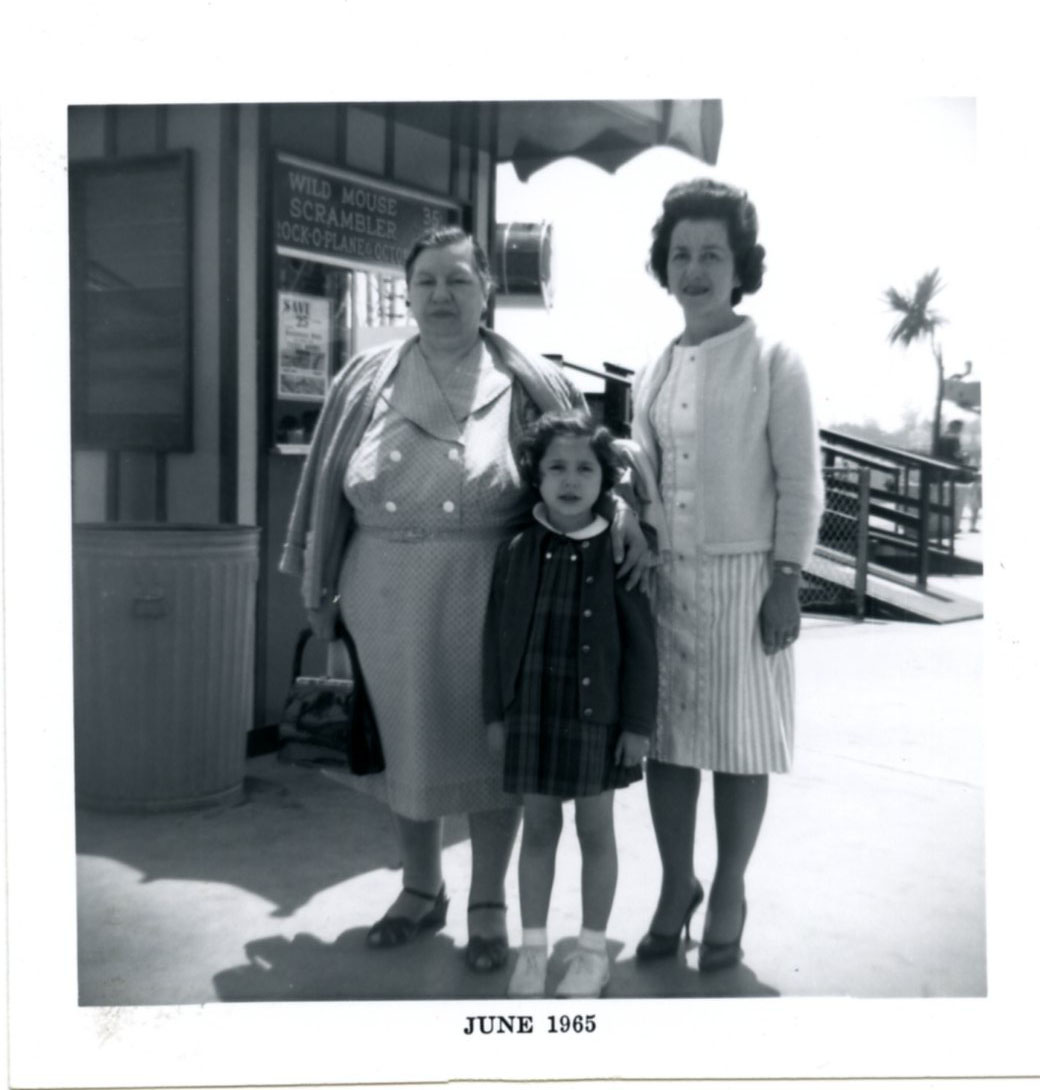
I thought John was the coolest person in the world.  If I could have been born a Beatle, I would have wanted to be John, but I suppose what I pined for more than anything in my youth was to be that elusive fifth Beatle.  I knew this was unrealistic since I possessed zero musical talent, but if they ever needed a moppet that could play a mean triangle, albeit off-key, I was ready.

"Lads, trust me, I can give Mom and Granny the slip."

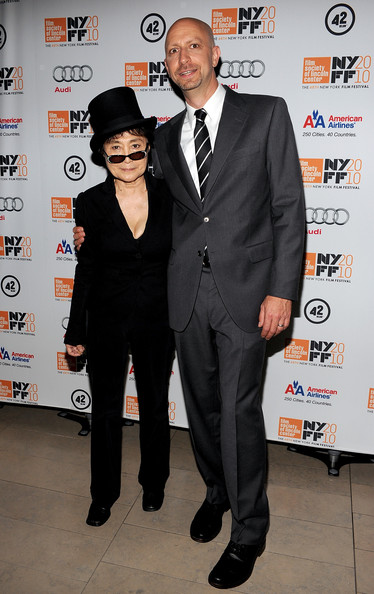
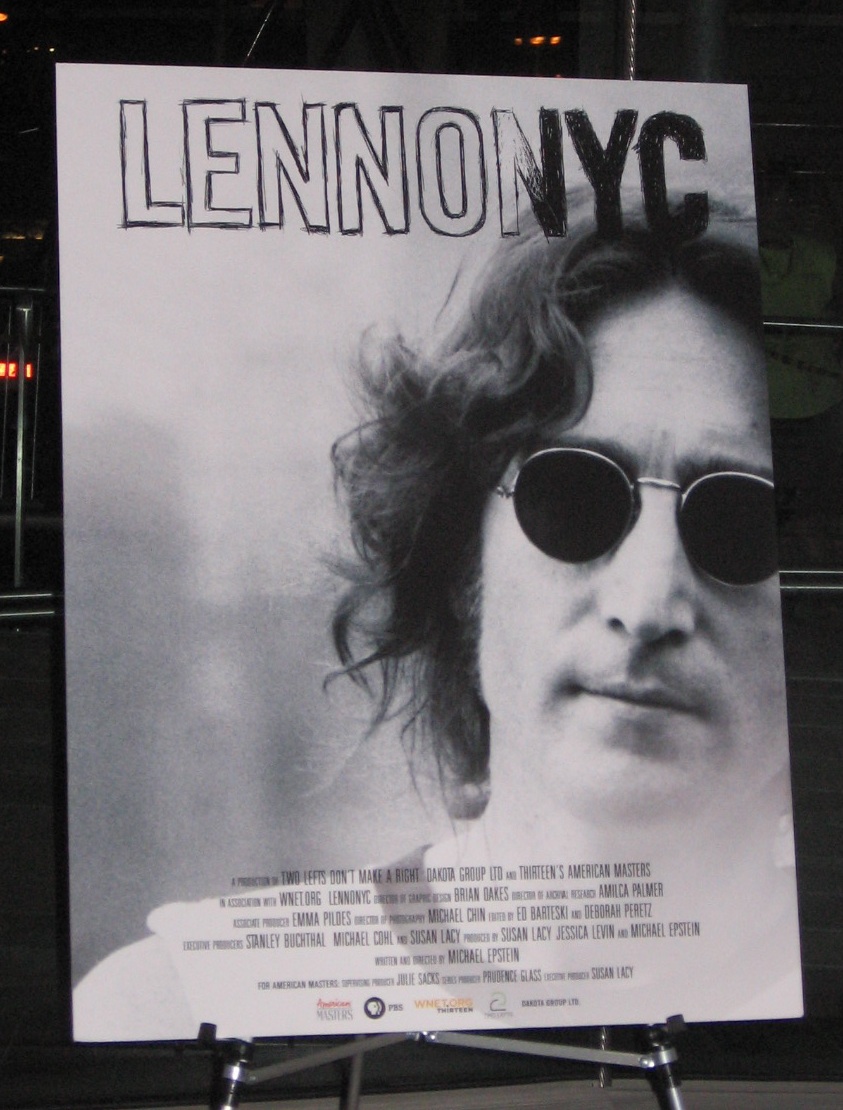
Soon, two new films about John will be released.  One is an excellent documentary packed with rare footage and audio about Lennon’s years in New York.  Appropriately it is titled, Lennon: NYC. Milton and I saw it when it premiered at the New York Film Festival where Yoko was in attendance.

Dapper Yoko with Lennon: NYC director Michael Epstein.

Our friend, Judy a.k.a. The Grande Enchilada, also attended this screening.  Milton and I agree that her review of it is spot on.  Check it out here.

PBS is going to broadcast Lennon: NYC on the American Masters series on Thursday, November 22nd at 9 pm.  It is also going to be screened for free at the Rumsey Playfield in Central Park on Saturday, October 9th.  Doors open at 6 pm, and the screening starts at 7 pm.

Lennon: NYC

Following the screening of Lennon: NYC there was a Q&A with director Michael Epstein and producer Susan Lacy.  As the Q&A was winding down, an audience member, whose name I believe was Dense Bonehead, demanded to know why this documentary only focused on Lennon’s life in New York City.  He was confounded over why it excluded coverage about Lennon’s years in Liverpool and completely baffled over why there was little allusion to what the Beatles accomplished in the Sixties.

This query from a muddled mind leads me to the second film about Lennon, a dramatic biopic called, Nowhere Boy, that opens in New York on Friday, October 8th.  It is entirely set in Liverpool providing Mr. Bonehead with a hearty fix of early circa 1950s John Lennon.  It explores his relationship with his free spirited, but troubled mother, Julia, and her grounded sister, Mimi, the strict aunt that raised him.  For anyone unfamiliar with Lennon’s youth, this film will seem like a revelation, but it’s not in the league with nuanced, less paint-by-numbers, cliche addled biopics, such as Walk the Line or Ray.

If Mr. Bonehead sees Nowhere Boy, he might gripe to the director, Sam Taylor-Wood, about why she did not show any footage of  John’s later years in New York?  This prompts my Sigmund Freud side to cry, “What do Beatle fans want?”

I know what this Beatle fan wants, and that’s to hear the music.  One devoted Beatle fan here in Gotham City is an infamous busker named Zack Heru.  Zack can frequently be seen indulging his love of the Beatles as he sings the band’s catalogue in the Fourteenth Street subway station tunnel between the Sixth and Seventh Avenue lines.  He has been doing this for at least ten years.  He told me that singing in this tunnel is his job.  I asked if he earns enough to support himself.  He answered, “I make enough to get a hotdog.”  I always enjoy hearing Zack play the Beatles music whenever I’m in that tunnel.

Lame Adventure 105: Tile and the Packing Peanut

Anyone who works on the serf-side of the tile and stone world will tell you that this is a material where, if it can go wrong, it is guaranteed that it will because tile, a product that is often beautiful, is also synonymous with mental anguish.   Hand crafted artisan tile in particular is essentially a bitch goddess.

For example, a customer approves a sample of a ceramic tile that is white, the material is ordered, but what the customer receives looks yellow.  The sales associate is asked to explain this phenomenon.  A flurry of phone calls are made, samples are shipped back and forth, the customer grows increasingly frustrated and the sales associate descends into the second coming of Ray Milland in The Lost Weekend.

Or, something can go terribly awry with the installation.  The customer that paid a king’s ransom for a gorgeous stone goes irate, and even though the material was perfectly fine, he screams it is defective when it was the sub-contractor that did not supervise his crew, five brothers named Clem, that lied through their missing teeth to get the job.

My role in the tile universe is to oversee the tile samples displayed in all of my company’s retail showrooms.  Our showrooms are shrines to tile so it is imperative that what we display looks perfect.  The second I sniff the scent of anything peculiar, I hop onto my Acme brand pogo stick and propel myself into my superior’s office.  Recently, I noticed that a color code differed between a sample and a tile vendor’s literature.

Many times when I contact our vendors what I spew is the first they’ve heard of the situation.  My company has a reputation for being insanely anal.  In this instance, the vendor is a guy I’ve known for many years.  He is not sure if our sample has since been reformulated or the label was mistyped.  He offers to send us a mini-sample kit with a condensed version of his entire line at no charge.  Free is my liege’s second favorite four-letter f-word.

Liege brings to mind a quote from Shakespeare’s Henry V, “Self-love, my liege, is not so vile a sin as self-neglecting.”  I must urge my sidekick, Greg, to reference that bit of poetry to Elsbeth, our boss, but it might prompt her to ask me confidentially if Greg has masturbation on the brain.  I could suggest that she must have he and I confused, and also remind her that he is the one with the longer sideburns and I, the flatter chest.

I am sitting at my desk crunching numbers for a sample order I must place.  This task is so underwhelming that I fill the concert hall of empty space in my head with my total recall of Tennessee Williams’ masterpiece, A Streetcar Named Desire.  Greg approaches me.

Greg:  Hey, Elsbeth’s mini sample kit arrived.

Me:  Stella!

Greg:  Should we open it?

Me:  Sure.

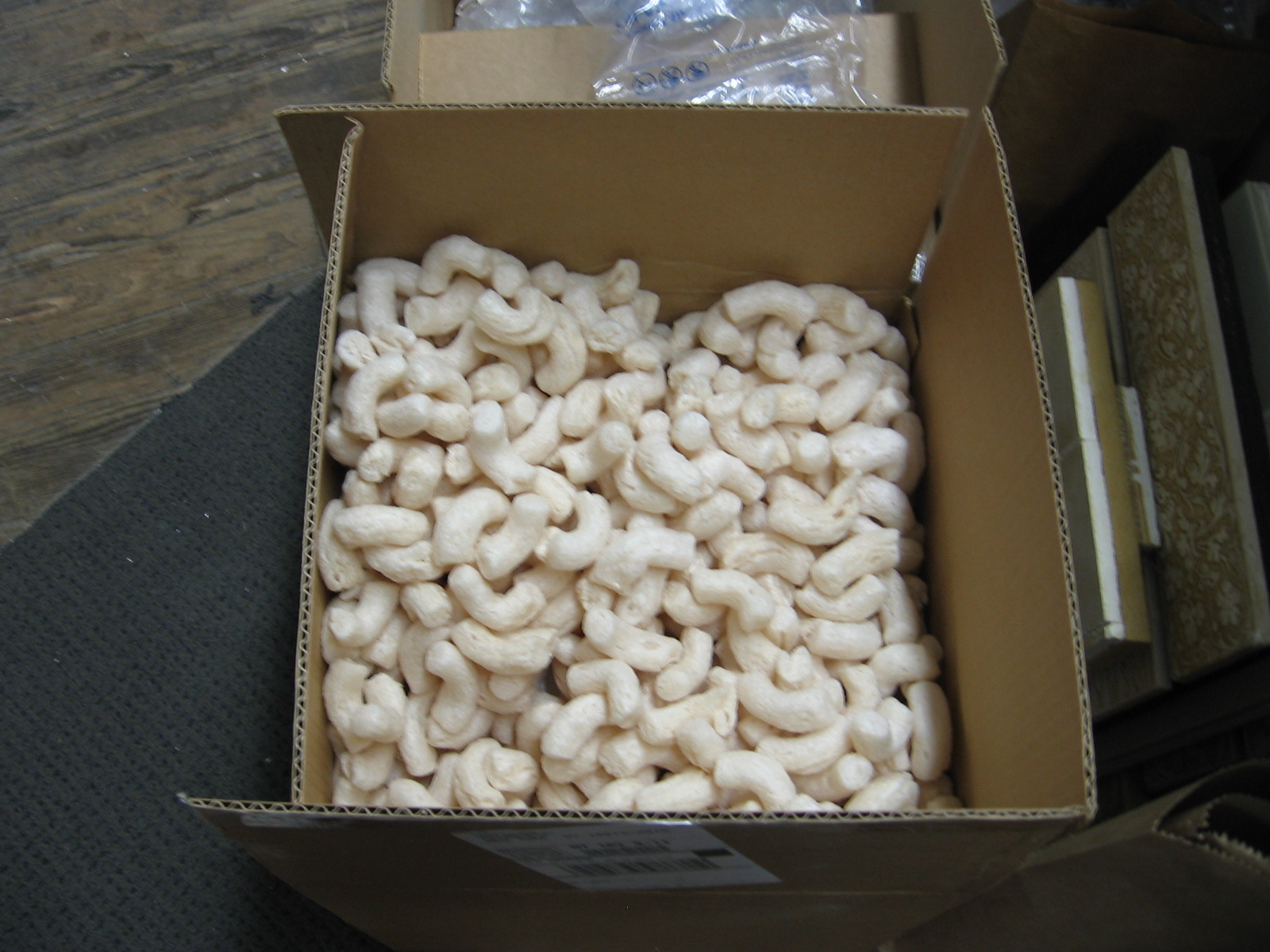
I follow Greg into our warehouse and see a large box.  He slices it open with a box cutter.  We are now staring at a massive pile of packing peanuts that reminds us both of Cheese Doodles.

Packing peanuts for all!

This inspires us.

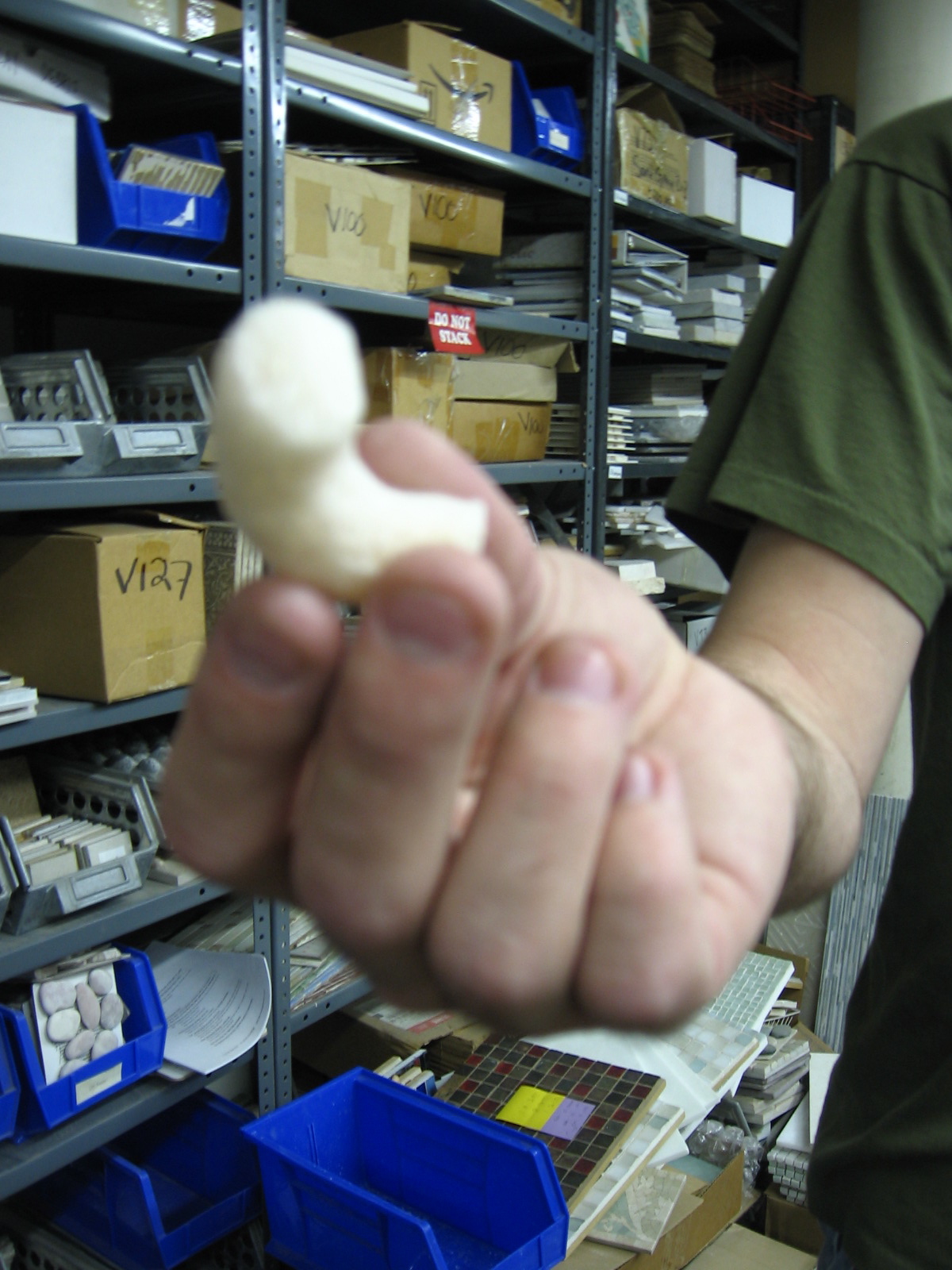
Me:  Let’s melt one!

The chosen one.

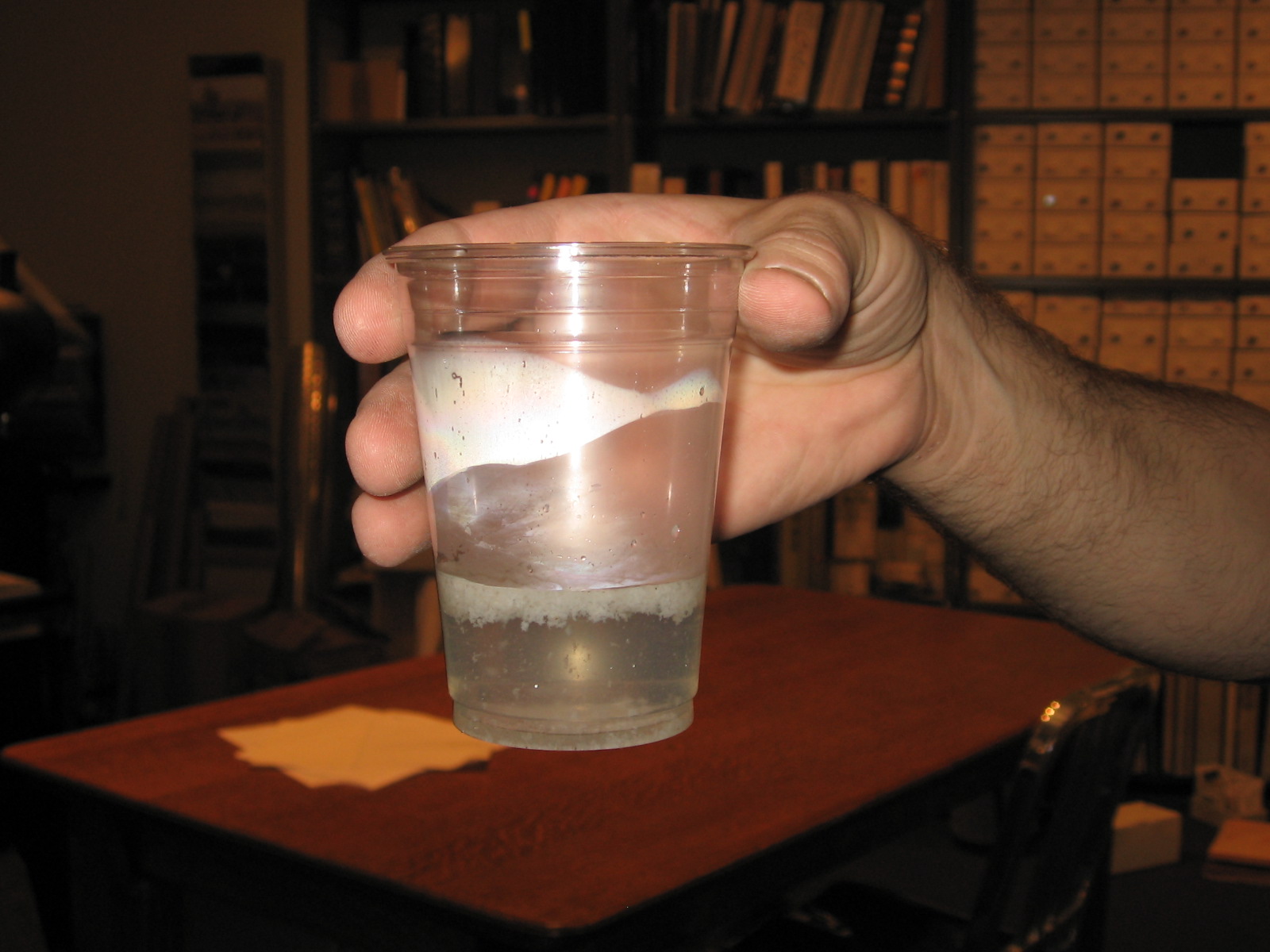
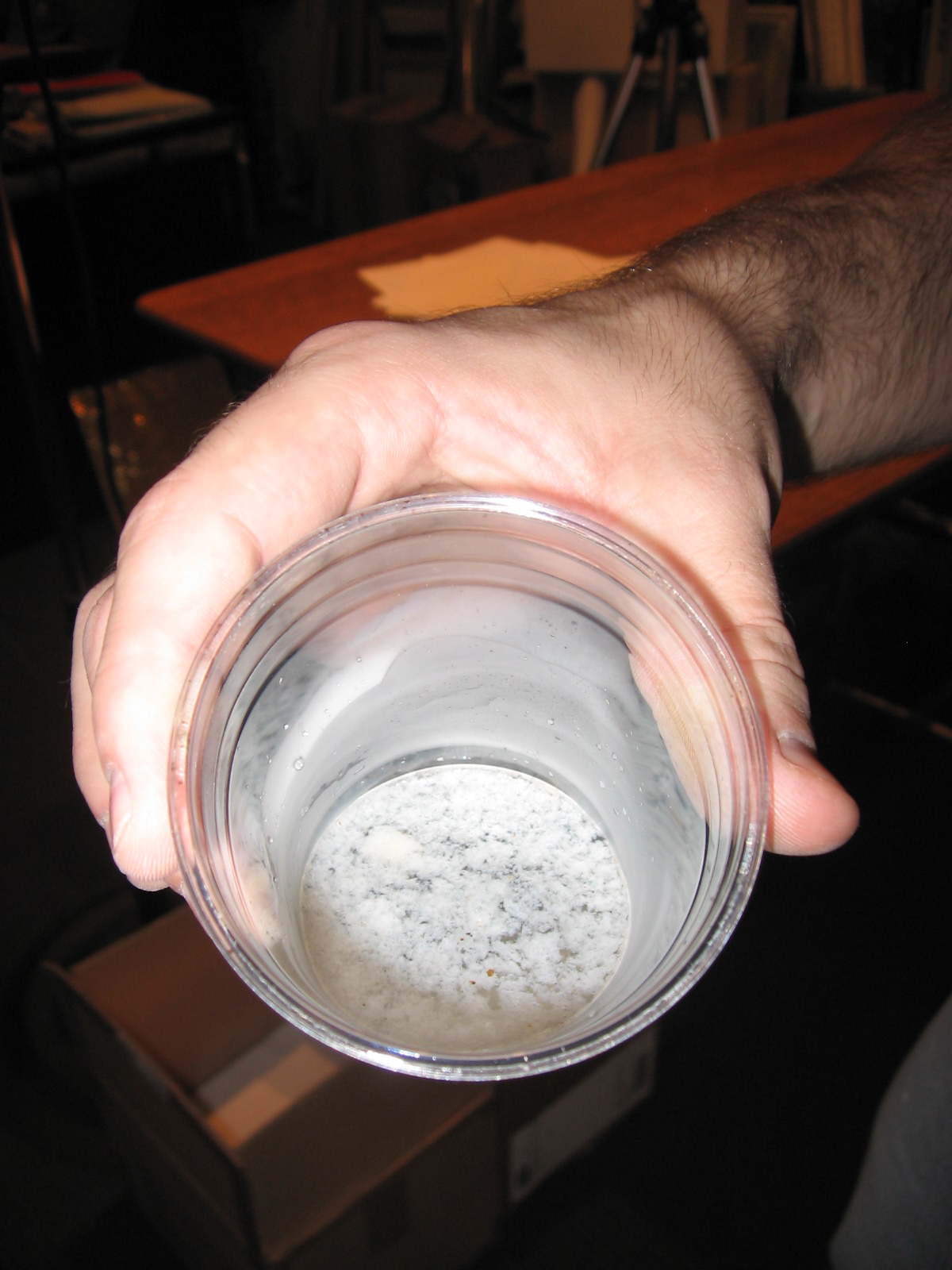
Greg scoops out a peanut, pops it into a drinking cup, and then pours hot water from the water cooler into the cup.  It dissolves instantly and our office reeks of corn.  All of our colleagues rise out of their stupor.

"I'm melting!"

Ling:  How bored are you that you’re melting packing peanuts now?

Under Ling:  I want to see the melted peanut!

Under Ling eye view.

The Quiet Man, the rock star working in the back of our office, removes his headphones and speaks for the first time since last Thursday.

The Quiet Man:  That biodegradable packing peanut you melted there is made from cornstarch so that explains why it smells like corn.  Technically, it’s edible, but I wouldn’t recommend you eat it since it’s unlikely that it was produced in food-safe conditions.  I’m sure they have no nutritional value, either.

Greg and I absorb this speech.  We resist the urge to applaud.  The Quiet Man reinserts his headphones and resumes ignoring us until October.

Me:  I’m sure they taste better than that bowl of organic twigs I called breakfast.

Looks like breakfast to me!

Lame Adventure 104: New York Film Festival SNAFU

It is New York Film Festival season, a favorite time of year to Milton and me.  Although we have ordered tickets in advance to several screenings, when we learn that tickets are still available for certain films we had not planned to see, we occasionally pick up a pair at the box office.  That was how we got tickets to a three o’clock screening of the Cannes Film Festival Palme d’Or winner, Uncle Boonmee Who Can Recall His Past Lives.  As I am walking to Lincoln Center to meet Milton to attend this screening, my cell phone rings.  The caller is Milton.

Me:  I’m almost there.  I’m five minutes away.

Milton (eerily calm; always a bad sign):  I just looked at the festival’s calendar.  The three o’clock screening is for Le Quattro Volte.

Required reading: New York Film Festival calendar.

Me:  Le what?

Milton:  The calendar says that Uncle Boonmee screens at nine.

Me (morphing into a parrot):  “Nine”?

Milton:  Yes, nine.

Me:  How is that possible?  We’re seeing Angels in America at 7:30.

The Signature Theatre Company has revived Angels in America.  Milton and I purchased those tickets two months ago.  We purchased our Uncle Boonmee tickets around eight o’clock the night before.  We were surprised that there were any tickets left to such an acclaimed, albeit difficult film, written and directed by soon-not-to-be-a-household-name, Apichatpong Weerasethakul.  Our friend, Judy, had warned us that it is best to be well rested and heavily caffeinated for this one.

Milton:  Look at our tickets.  What time is the screening?

I look at the tickets.  The musical cue is the downbeat.

Me:  Nine.

I proceed to note in language invoking images of the deity, mothers, sexual intercourse and excrement that we are in quite a pickle since this is a no exchange/no returns situation.  I bellow for the entire Upper West Side to hear, as if speaking to the Son of God himself, “Jesus Christ, do you realize that we’ve donated $40 to the Film Society of Lincoln Center?”

My stomach acid soars like a rocket to Mars.  Moments later when I see Milton smiling I open my mouth to greet him, but instead, I singe his face with flames.  In response, he morphs into a Jewish mother and blames himself for this predicament recalling that he was one-and-a-half sheets to the wind when he noticed the sign that said tickets to this alleged three o’clock screening of Uncle Boonmee were still available the night before.  I remind him that I was stone cold sober and standing next to him looking at that exact same sign.  It did not occur to either of us that the announcement was for a three o’clock screening that had happened earlier that day, i.e. a past screening.

I bounce up to the box office window like a featherweight boxer determined to make mincemeat out of my opponent, in this case a sleep-deprived woman somewhere in her forties.  Feigning calm, I explain our situation to her.  I play the humility card and admit that we were boneheads that did not look at the show time on our tickets while standing at the box office window.

Alice Tully Hall box office window; a window we now know well.

Ticket Seller:  There are no refunds or exchanges for tickets purchased for same day screenings.

Me:  This was an honest mistake we made.

Ticket Seller:  Would you like to see what’s screening today at three o’clock?

Me:  No.  It’s not Uncle Boonmee.

Ticket Seller:  Yes, Uncle Boonmee screens at nine.

Me:  We’re seeing Angels in America at nine.  If we knew Uncle Boonmee was screening at the same time as Angels, we would not have bought these tickets.

Ticket Seller:  Would you like to see something else at another time?

Milton (elated):  We can make an exchange?

Ticket Seller (completely worn down):  Yes.

Milton:  I can live with that!

We select The Strange Case of Angelica, a ghost story written and directed by 101-year-old Portuguese filmmaker Manoel de Oliveira.  De Oliveira directed his first film in 1942, his second in 1963, his third in 1975, three more in the eighties, five in the nineties, and nine in the 2000s.  If he lives another 101 years, at this rate, he’ll be cranking out features weekly.  Before leaving the box office window we double-check the date and show times on our tickets forty-three times.